
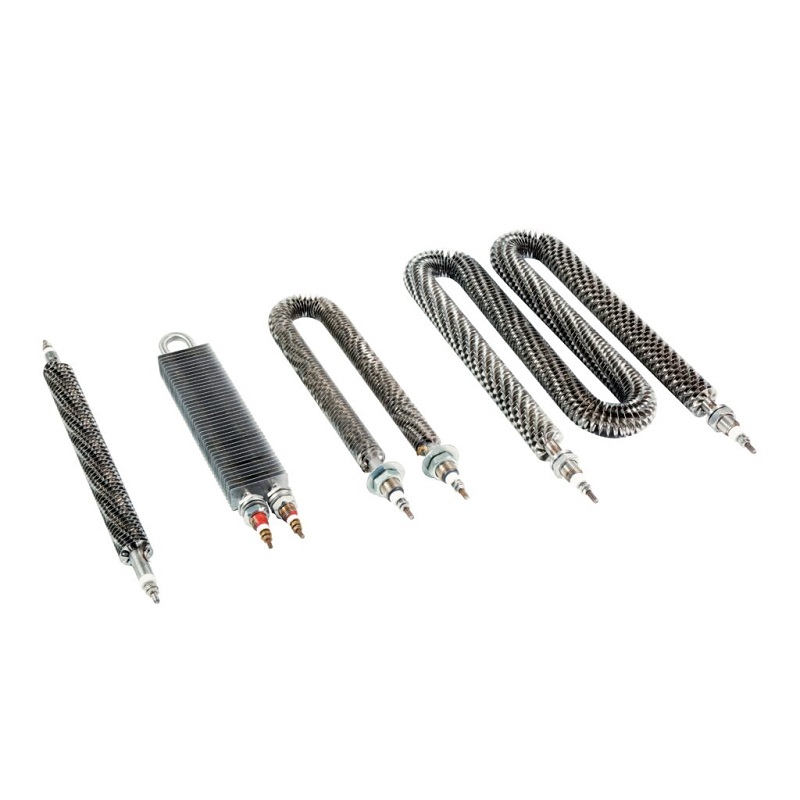
Industrial Finned Tubular Air Heater
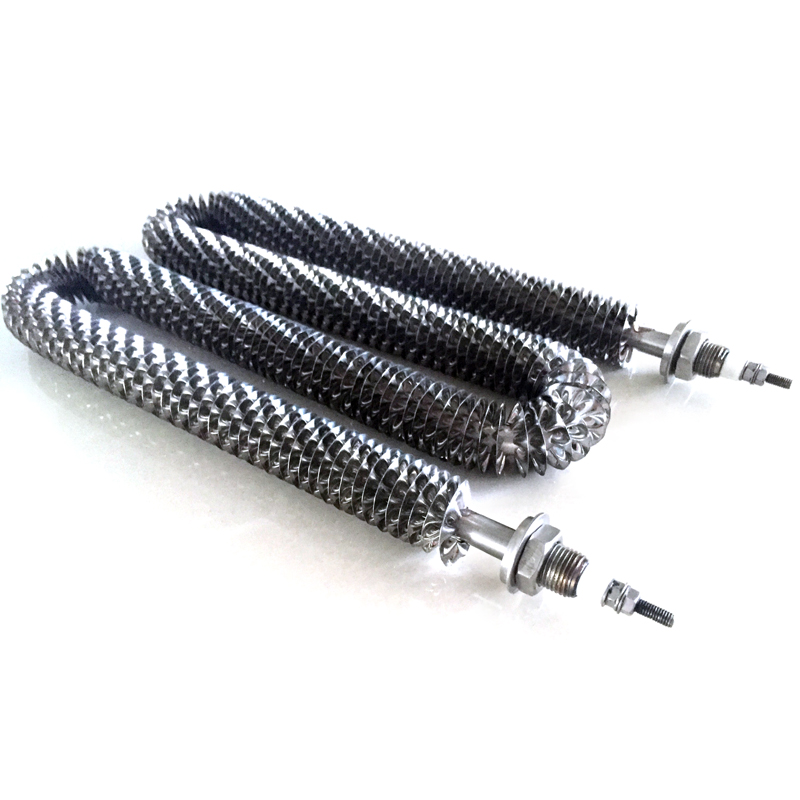
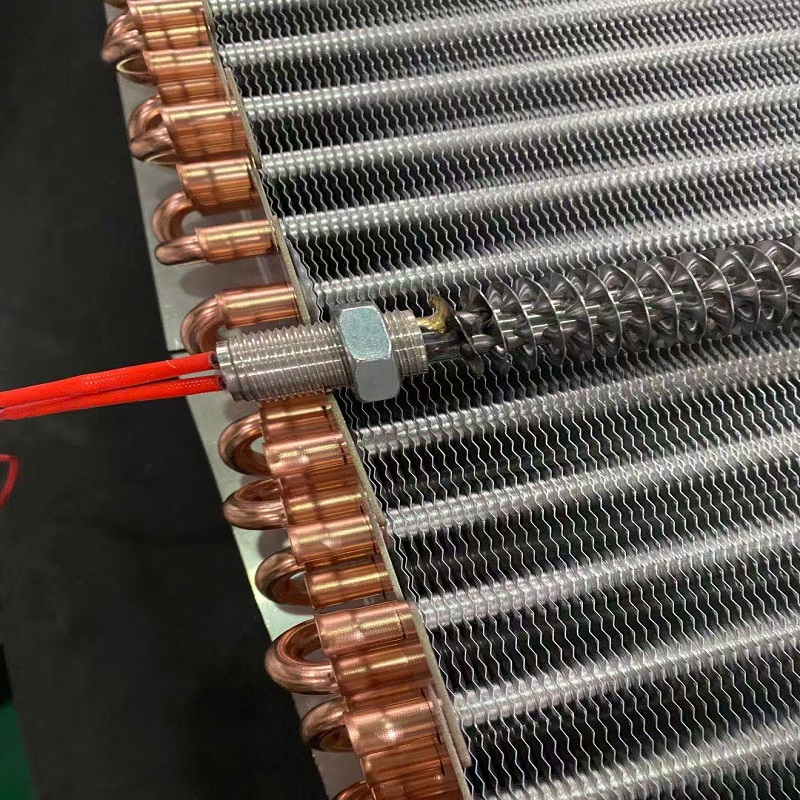
Designed for high-efficiency heat transfer in both natural convection and forced convection environments, our finned tubular air heaters deliver fast, uniform air heating for demanding industrial applications. The mechanically-bonded continuous fin construction maximizes surface contact and helps prevent fin vibration even at high air velocities.
Key Benefits
- High heat transfer efficiency: Expanded fin surface area improves heat transfer to airflow.
- Anti-vibration fin design: Mechanically-bonded continuous fin prevents rattling at high air velocity.
- Built for industrial duty: Rugged construction for long service life in harsh environments.
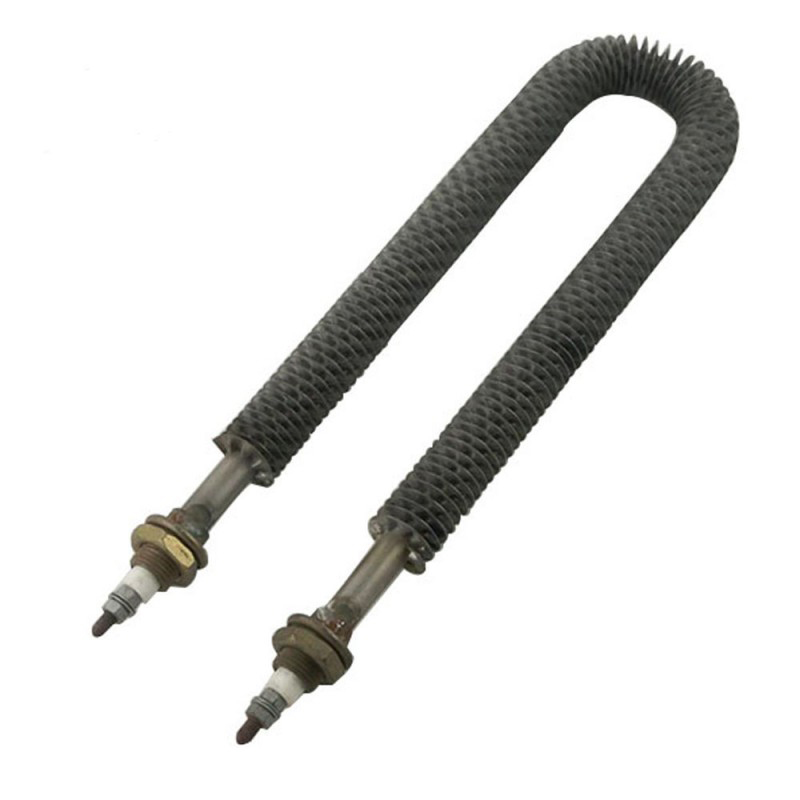
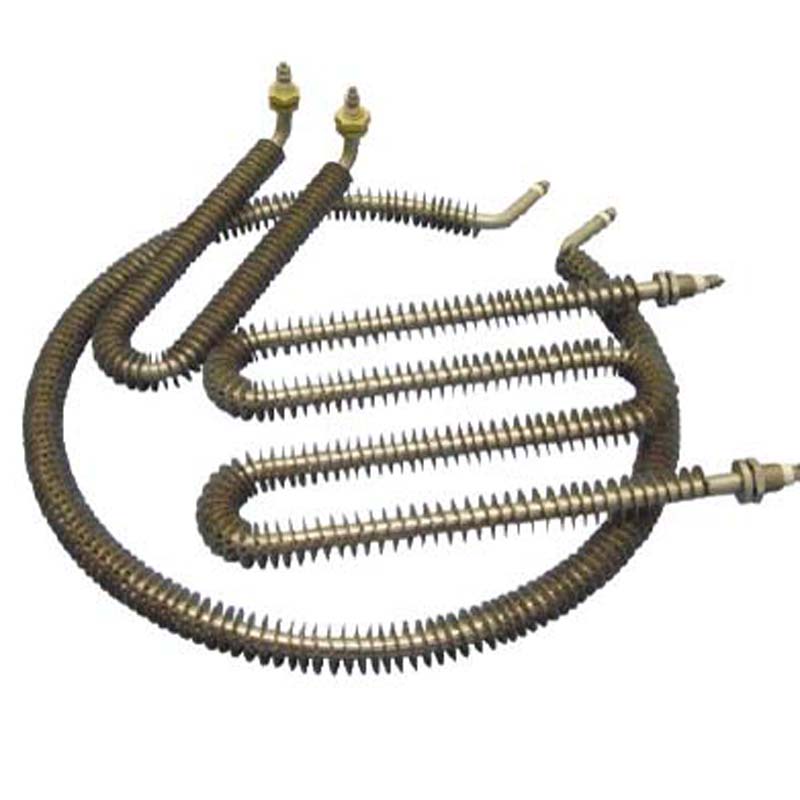
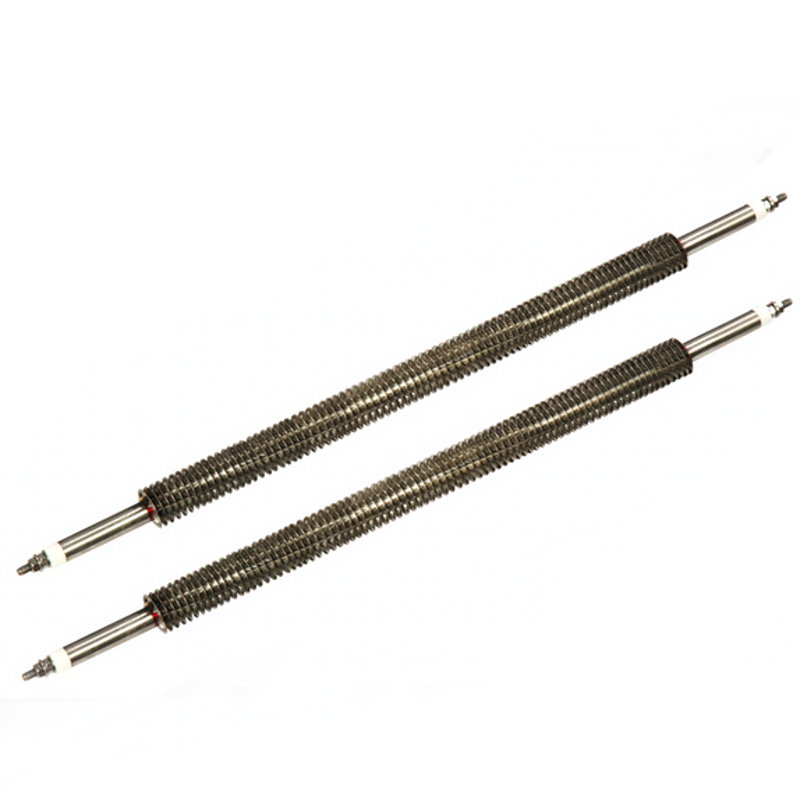
- Flexible configurations: Straight, U-type, W-type (M-bend), and round/coil designs.
- OEM & customization: Voltage, wattage, dimensions, fin density, and mounting can be engineered to your system.
Technical Specifications & Dimensions
The table below outlines standard engineering parameters. Customization is available to meet specific duct dimensions, airflow conditions, and target temperature rise requirements.
| Parameter | Standard Specification | Customizable Options |
|---|---|---|
| Sheath Material | Stainless Steel / Steel | Incoloy / Custom Alloys |
| Fin Construction | Mechanically-bonded continuous fin | Other fin constructions available upon request |
| Fin Material | SUS304 (Stainless Steel) | Other fin materials available |
| Tube Diameter | 6mm, 8mm, 10mm, 12mm, 14mm, 16mm, 18mm, 20mm | Per drawing / project requirements |
| Voltage Options | 120V, 208V, 240V, 480V | Special voltages available |
| Max Sheath Temperature |
750°F (400°C) for Steel 900°F (480°C) for Stainless Steel / Incoloy |
Depends on material selection & operating conditions |
| Configurations | Straight, U-Type, W-Type (M-Bend), Round / Coil | Custom shapes per CAD drawings |
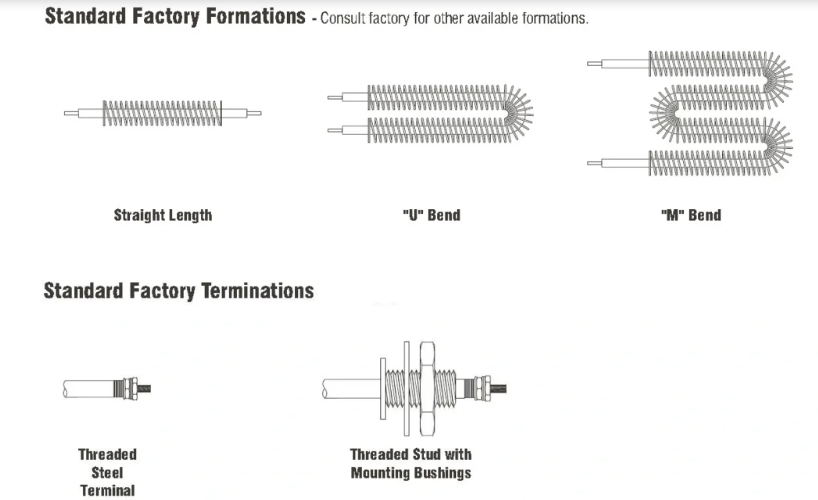
| Mounting / Terminations | Threaded steel terminals | Threaded studs with mounting bushings; other terminations available |
Standard Formations
Standard factory formations include Straight Length, U-Bend, and M-Bend (W-Type). Custom bending (round/coil and complex geometries) is available per CAD drawings to match duct layouts and installation constraints.
- Straight Length: Ideal for long ducts and uniform airflow heating.
- U-Bend: Compact layout with increased heated length in limited space.
- M-Bend (W-Type): Higher heated surface area density for compact heater sections.
- Round / Coil: Suitable for circular airflow paths or specialized equipment.
Industrial Applications
These heaters are engineered for systems requiring increased heat transfer surface area. Common applications include:
- Forced Convection Heating: Air handling units (AHU) and HVAC duct systems.
- Process Gas Heating: Industrial gas heating and air preheating.
- Industrial Drying: Drying ovens and cabinets requiring uniform heat distribution.
- Load Banks: Resistive load testing equipment.
- Environmental Control Units (ECU): Heated air modules for controlled air supply.
Installation & Wiring Notes (Engineering Guidance)
- Mounting: Standard units often use threaded studs with mounting bushings for secure bulkhead installation through duct walls or terminal enclosures.
- Orientation: For long straight lengths or complex M-bends, supports are recommended to prevent sagging and maintain uniform heat dissipation.
- Terminal Temperature: Keep electrical terminals in a cooler zone (outside the heated airstream) to protect connections and improve service life.
Why Choose Mechanically-Bonded Continuous Fins?
- Vibration Resistance: The fin is securely bonded to the sheath, preventing displacement or rattling caused by high air velocities in forced convection systems.
- Thermal Efficiency: Tight mechanical bonding minimizes air gaps between fin and tube, ensuring excellent heat transfer from the element to the airstream.
Frequently Asked Questions (FAQ)
What is the benefit of a finned tubular air heater compared with a standard tubular heater?
Finned heaters provide a significantly larger surface area than standard tubular elements, increasing heat transfer capability. This makes them more efficient for air and gas heating applications where rapid heat exchange is required.
Can you manufacture custom shapes beyond standard Straight, U, and M bends?
Yes. In addition to standard formations, we can produce round/coil designs and complex geometries based on CAD drawings to fit specific duct dimensions and equipment layouts.
What are the temperature limitations for these heaters?
Maximum sheath temperature depends on material selection. Steel sheath models are rated up to 750°F (400°C), while Stainless Steel or Incoloy models can operate up to 900°F (480°C).
Can you help size the heater for my airflow and temperature rise?
Yes. We can engineer heaters based on airflow (CFM), duct size, static pressure constraints, and required temperature rise. Watt density calculations can be provided to optimize heater life and system efficiency.
Request a Quote / Custom Engineering
To recommend an optimal heater design, please share your operating conditions such as: airflow (CFM or m³/hr), duct dimensions, target temperature rise, voltage, and installation constraints. CAD drawings are welcome for custom shapes and mounting requirements.
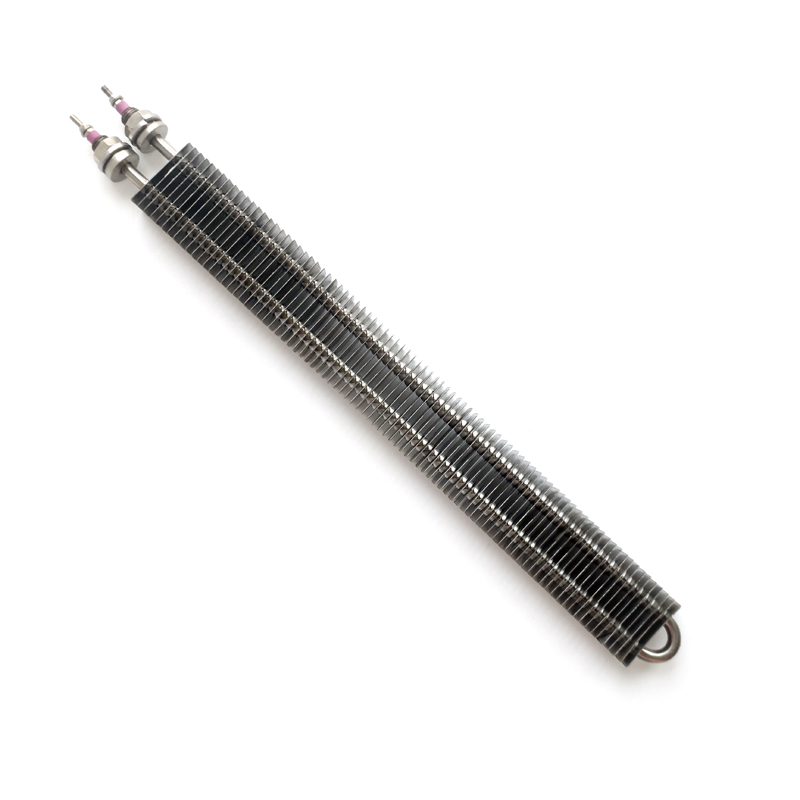
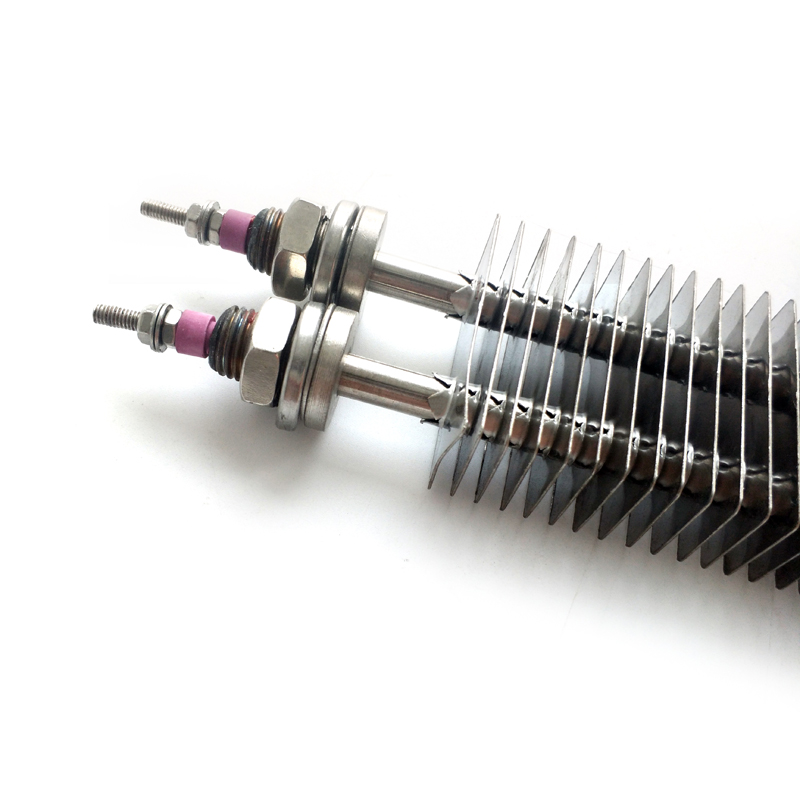
Frequently Asked Questions
What is a finned tubular air heater?
A finned tubular air heater is an electric heating element with metal fins attached to increase surface area, improving heat transfer efficiency when heating moving air.
What industries use finned tubular heaters?
They are widely used in HVAC systems, environmental control units, drying systems, industrial ventilation, and air handling units.
Can the heater be customized?
Yes. Voltage, power rating, tube material, fin material, fin density, dimensions, and mounting style can all be customized according to project requirements.
What materials are available?
Common materials include stainless steel, carbon steel, Incoloy for the heating tube, and stainless steel or aluminum fins.
Related Products